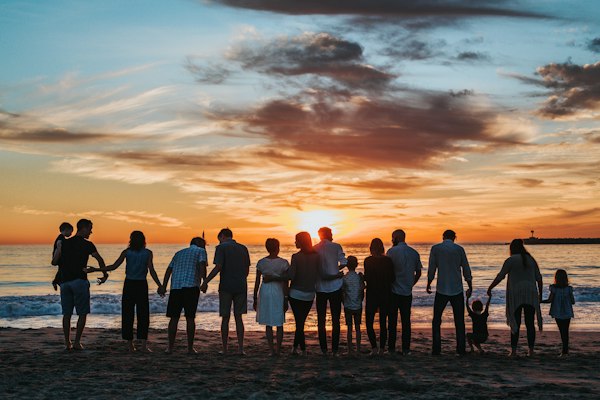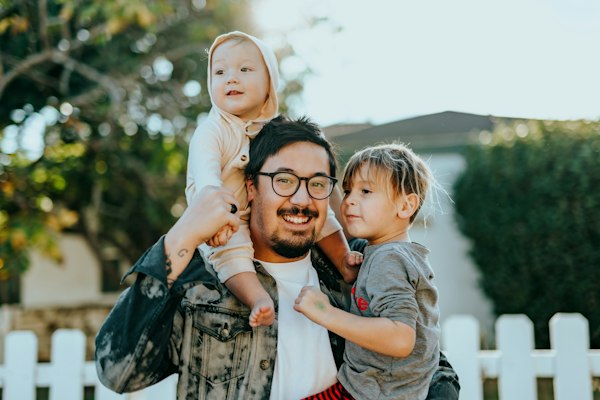
There's a particular kind of silence that settles over a family when someone passes away. Not just the absence of their voice, but the absence of everything they carried inside it — the stories they told over dinner, the ones they never got around to telling, the details only they remembered. A name. A place. The reason behind the tradition nobody questioned. In one generation, decades of lived experience can vanish without a trace.
We are living through a strange contradiction. We have more tools than ever to record, store, and share information — and yet family stories are disappearing faster than at any point in human history. The question isn't whether we have the technology. It's whether we're using it before it's too late.
The Digital Revolution in Family Storytelling
For most of human history, family stories were passed down orally. A grandmother would sit with her grandchildren and talk about the old country, about how she met their grandfather, about the winter the river froze and they walked across it to church. These stories were alive — shaped by the teller's voice, their pauses, their laughter, the way they leaned forward when they got to the important part.
Then came written records, then photography, then home video. Each new technology promised to make preservation easier. And each one did, to a point. But the digital age has done something different. It hasn't just given us better tools — it has fundamentally changed our relationship with memory itself. We take thousands of photos but print none. We record hours of video but never watch it back. We have cloud storage measured in terabytes and family history measured in fragments.
The digital revolution in family storytelling isn't about having more storage. It's about finding ways to capture what matters — the stories, the context, the voice — before the person who holds them is gone.
Why Traditional Methods Are Fading
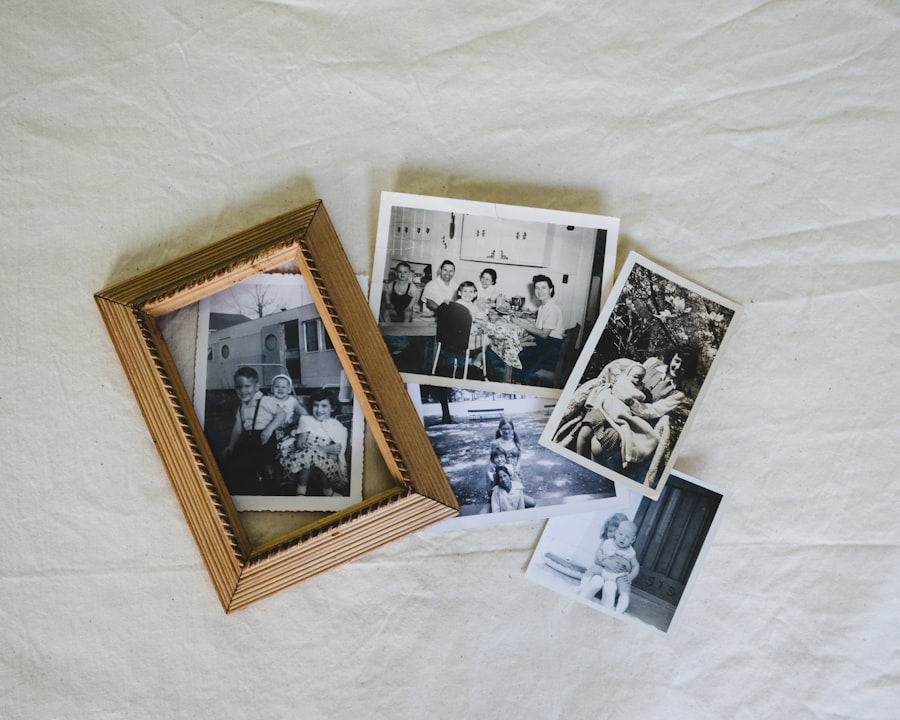
There was a time when every family had a photo album. Heavy, leather-bound, with pictures carefully glued to thick pages and captions written in ballpoint pen. Your grandmother's handwriting beneath a faded snapshot: "Easter Sunday, 1967. Margaret's first time in the yellow dress." That album sat on a shelf in the living room, and anyone could pick it up and step into the past.
Those albums are disappearing. Not because families don't care about their memories, but because the habits that created them no longer exist. We don't print photos anymore. We don't write letters. The handwritten journal that great-aunt Helen kept for forty years — that kind of sustained, deliberate record-keeping feels almost impossible in a world of notifications and 24-hour news cycles.
"We went from too few tools to too many. And somewhere in the middle, we stopped doing the one thing that actually mattered — sitting down and listening."
The irony is painful. Our parents and grandparents had fewer tools but used them with intention. We have infinite tools and use them for everything except the things that matter most. The family stories don't make it into the cloud because nobody thinks to put them there — and the people who hold those stories aren't the ones comfortable with the technology.
Modern Tools That Make Preservation Easier
The good news is that a new generation of tools is emerging — designed not for tech-savvy millennials posting to social media, but for families who want to preserve something real. Voice recording apps that capture conversations in high fidelity. AI-powered transcription that turns hours of audio into searchable, readable text. Digital archives that organize memories by theme, date, and person, making it possible to find that one story about your father's first job in seconds.
Some families are using video calls to conduct interviews across distances that would have made such conversations impossible a generation ago. Others are turning to AI-assisted tools that can prompt meaningful questions, guide conversations toward deeper territory, and ensure that the important topics don't get overlooked.
But here's what most of these tools get wrong: they assume the storyteller is comfortable with technology. They require downloads, logins, cameras, and screens. They ask a 78-year-old to behave like a 30-year-old. And when the technology becomes a barrier, the stories stay untold.
Where Lifestoria Fits In
Lifestoria was built around a single insight: the best way to get someone to share their life story is to meet them where they already are. For most older adults, that means a phone call. Not an app. Not a website. Not a video recording setup that makes everyone self-conscious. Just a phone ringing at a time that works, and a warm, patient voice on the other end asking the kinds of questions that unlock decades of memory.
Your mother doesn't need to download anything. She doesn't need to create an account or remember a password. She picks up the phone, and the conversation begins. It feels natural — because it is natural. She's been having phone conversations for sixty years. The only difference is that this one is designed to draw out the stories that matter, and everything she shares is captured, transcribed, and preserved for her family.
"The technology should be invisible to the storyteller. The conversation should feel like talking to a friend — not operating a machine."
Over weeks and months, the calls build on each other. Each conversation goes deeper, picks up threads from previous sessions, follows the stories that matter most to the teller. What emerges isn't a list of answers to a questionnaire — it's a living portrait of a person, told in their own words, at their own pace.
The Power of the Storyteller's Own Voice
There's something irreplaceable about hearing a story in the voice of the person who lived it. The way your grandfather pauses before describing the day he left home. The catch in your mother's voice when she talks about her sister. The laugh that comes when your father remembers the ridiculous thing he did at seventeen. No written summary, no matter how well-crafted, can capture that.
Research in oral history has consistently shown that voice recordings carry emotional weight that text alone cannot replicate. When future generations listen to these recordings, they don't just learn facts about their family — they feel a connection to people they may never have met. They hear the accent, the rhythm, the personality. They hear someone real.
This is why Lifestoria preserves not just the transcript but the audio of every conversation. The words matter, but the voice matters more. Decades from now, your grandchildren will be able to hear their great-grandmother describe her wedding day — not in someone else's retelling, but in her own words, in her own voice, with all the warmth and humor and emotion that made her who she was.
What We Lose When We Wait Too Long
Every family has a version of this story. Someone meant to sit down with a parent or grandparent and ask them about their life. They planned to do it over the holidays, or next summer, or when things calmed down at work. And then one day the opportunity was gone — suddenly, or slowly, but gone all the same.
The average American loses their last grandparent before the age of 30. For many families, the window for capturing these stories is narrower than they think. Memory conditions like Alzheimer's and dementia further compress the timeline. The stories that exist only inside someone's mind have an expiration date, and we rarely know what it is until it has passed.
This isn't meant to create guilt — though if you feel a pang of recognition reading this, you're not alone. It's meant to create urgency. Not panic, but the kind of quiet resolve that says: I'm going to do something about this. Not someday. Soon.
Starting Is Easier Than You Think
The biggest barrier to preserving family stories isn't technology or money or even time. It's the feeling that it needs to be a big production — a formal interview, a professional setup, a perfect list of questions. It doesn't. The best family stories are captured in ordinary conversations, when someone feels comfortable enough to wander into a memory they haven't visited in years.
With Lifestoria, starting takes five minutes. You provide a phone number and choose a time. The first call happens without any preparation from the storyteller. There's no homework, no questionnaire to fill out in advance, no pressure to perform. Just a conversation — and the stories start flowing.
After the call, the family receives a beautifully organized story — transcribed, summarized, and stored in a private family archive. Family members can listen to the original audio, leave reactions, and even submit questions they'd like explored in future conversations. Over time, what builds is something extraordinary: a complete portrait of a life, told by the person who lived it.
The digital age has given us remarkable tools for preservation. But tools are only useful if we use them — and if we use them in time. Your family's stories are waiting to be captured. The people who hold those stories are here right now, ready to share them if someone simply asks.
Don't let the silence settle. Pick up the phone — or better yet, let Lifestoria pick it up for you.